Choose a legible typeface
By Emily Halloran
A legible typeface in your documents and on your website makes it easier for readers with low vision or dyslexia to read your writing. You can start with common, easy-to-read typefaces, such as Calibri, Verdana or Tahoma.
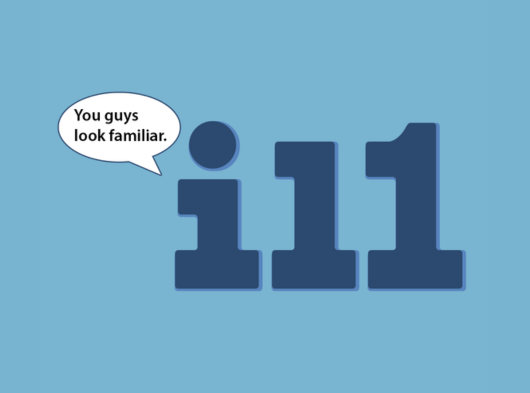
What: Some typefaces have letters and symbols that readers confuse easily. For example: Z2 / 22, LJ / LI / LI / U and clear / dear. This confusion makes it harder for readers to decode your writing. As Tom Wadsworth explains, ‘decoding is what you do when you read. Your brain translates letters into sounds to identify words and links these words to their meaning.’
A typeface without these imposter letters and symbols makes decoding a lot easier for readers, which means they’ll be able to read and understand your writing more quickly and accurately.
Who: Readers with low vision, readers with dyslexia and readers over 45.
Who else: Readers between 13 and 45 who don’t identify as having a disability (according to a study by Thomas Bohm). And if your reader has tired eyes or has been staring at a computer all day, they’ll thank you for choosing a typeface that doesn’t need too much brain power to decode.
What now: Vision Australia recommends common, easy-to-read typefaces, such as Calibri, Verdana or Tahoma.
For something designed specifically for readers with low vision, you can try Atkinson Hyperlegible® by the Braille Institute. But the challenge with this free typeface is that it only appears on devices that have it installed. On devices without it, text defaults to a different typeface, which means your message will look different and might be less legible than you hoped. Fortunately, there are no such problems with printed documents.
For more advice about legibility, read our blog: Tattoos, road signs and typefaces. Want to know more about supporting readers with dyslexia? Download our ebook: Write for Every Brain.
This series is about encouraging you to take small steps toward better communication. You don’t need to change everything about your communication style right now, just one small thing each week – trust the snowball effect to take care of the rest.